

The updated BYD Atto 3 EVO Dynamic combines a more mature design, useful electric range and everyday practicality. But with a $59,990 starting price, does it make financial sense for company-car drivers and fleet operators?
Electric vehicles are increasingly becoming a viable option for New Zealand businesses, but choosing the right one involves more than comparing range figures and charging speeds. Purchase price, driver comfort, carrying capacity, charging access and long-term ownership costs all have a role to play.
The BYD Atto 3 EVO Dynamic aims to tick many of those boxes. As the entry-level model in the updated Atto 3 EVO range, it offers a straightforward front-wheel-drive electric powertrain, a claimed WLTP range of up to 420km and a more conventional, user-friendly cabin.
It also arrives in an increasingly competitive market, where fleet managers have more electric SUV options than ever before.
Exterior: Professional, without being predictable
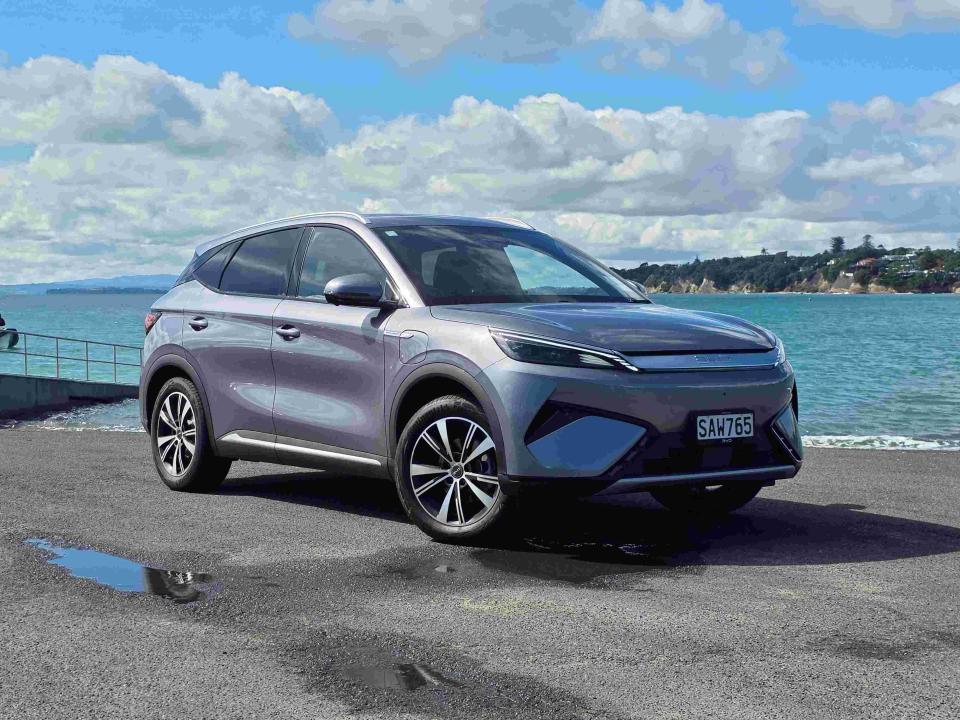
The original Atto 3 stood out through its rounded styling and distinctive design details. The EVO update retains the familiar proportions while introducing a cleaner, more contemporary appearance.
BYD's revised Dragon Face front-end styling gives the vehicle a sharper look, while the updated lighting signature and distinctive rear light design help it maintain its identity.
Measuring 4,455mm long, 1,875mm wide and 1,615mm tall, with a 2,720mm wheelbase, the Atto 3 EVO Dynamic occupies a useful middle ground for business use. It is compact enough to negotiate urban streets, car parks and tight office-building accessways, yet offers the footprint expected of a family-sized SUV.
For businesses operating in city environments, those dimensions can be an advantage over larger electric SUVs. The Atto 3 EVO is easy to envisage as a company car for sales representatives, managers and employees who need a vehicle that can handle both weekday commuting and family duties.
It is an evolution rather than a complete redesign, but the more mature styling should appeal to buyers looking for a contemporary business vehicle without an unnecessarily aggressive appearance.
Interior: Practicality takes priority
Inside, BYD has moved towards a cleaner, more conventional cabin layout. Some of the original Atto 3's more unusual design flourishes have given way to a more restrained arrangement, which should make the EVO easier to live with on a daily basis.
An 8.8-inch digital instrument display provides key driving information, while the revised steering wheel and column-mounted gear selector help free up space around the centre console.
The result is a cabin that feels better organised and less cluttered. For employees spending considerable time behind the wheel, a straightforward driving environment is more than a cosmetic benefit.
The driving position offers a commanding view of the road, while the flat rear floor improves passenger comfort. The rear seating area should prove useful for staff carrying colleagues to meetings or transporting family members outside working hours.
Boot capacity is approximately 434 litres with the rear seats in place, expanding to around 1,340 litres with them folded. That provides useful room for work bags, presentation equipment, luggage and everyday business essentials.
It is not a substitute for a dedicated commercial van, but for businesses that need passenger transport with occasional cargo-carrying flexibility, the Atto 3 EVO Dynamic offers a sensible balance.
Infotainment and technology: Connected and convenient
Modern company vehicles need to keep drivers connected without making everyday functions unnecessarily complicated.
The Atto 3 EVO Dynamic features BYD's Di-Link intelligent cockpit, with wireless Apple CarPlay and Android Auto, intelligent voice control and a central touchscreen that manages entertainment, navigation and vehicle settings.
Wireless smartphone integration removes the need to connect a cable every time a driver gets into the vehicle. A 50W wireless charging pad is also included, providing a convenient way to keep compatible smartphones charged throughout the working day.
However, the reliance on touchscreen controls remains a consideration. While the system provides plenty of functionality, frequently used functions are generally easier to access when they are intuitive and require minimal distraction.
For fleet operators, technology should ultimately improve productivity and convenience rather than introduce another learning curve. Drivers may need some time to become familiar with the system, particularly if they are transitioning from a different vehicle brand.
Powertrain: Enough performance for everyday business
The Dynamic uses a single front-mounted electric motor producing 150kW and 310Nm, powered by a 60.48kWh lithium iron phosphate (LFP) Blade Battery.
The result is a claimed 0–100km/h time of 7.3 seconds and a WLTP driving range of up to 420km.
Those figures make the Dynamic well suited to everyday commuting, urban appointments and regional travel, without stepping into the higher purchase price and performance territory of the more powerful EVO variants.
Electric torque is available immediately, making the vehicle responsive when pulling away from intersections, joining motorway traffic or navigating stop-start urban conditions. Acceleration is smooth and progressive, while the absence of a conventional combustion engine contributes to a quieter driving experience.
For employees covering regular business routes, that refinement can make a difference over a full day behind the wheel.
The front-wheel-drive layout also keeps the drivetrain relatively straightforward. However, with 310Nm delivered through the front wheels, measured acceleration is preferable to heavy throttle inputs, particularly on wet or slippery surfaces.
The LFP battery chemistry is another consideration for businesses evaluating electric vehicles. It is designed with durability and safety in mind, although actual battery longevity depends on operating conditions, charging practices and usage.
Charging and range: Planning makes the difference
The Atto 3 EVO Dynamic's claimed range of up to 420km provides a useful starting point for assessing its suitability for a business fleet.
For employees travelling predictable daily distances, particularly those returning to a depot or home at the end of the day, the vehicle could fit neatly into a managed charging routine.
Charging capability is rated at up to 110kW on a DC fast charger, with a claimed 10–80% charging time of approximately 41 minutes. AC charging is supported at up to 7kW, with a claimed 15–100% charging time of around 9.5 hours.
In practice, overnight charging at a suitable home or workplace installation is likely to be the most convenient option for many users. Public DC charging can provide additional flexibility for longer journeys, although charging time, availability and cost will depend on the location and charging equipment.
Fleet managers should assess actual driving patterns before deciding whether the Dynamic is suitable. Employees covering predictable urban and suburban routes may find it an easy fit, while those undertaking frequent, long-distance trips will need to consider charging stops and access to reliable charging infrastructure.
The 420km WLTP figure is a laboratory-based rating, not a guarantee of real-world range. Speed, weather, terrain, passenger loads and climate-control use can all influence the distance available between charges.
Safety, ownership and total cost of ownership
The Atto 3 EVO Dynamic is priced at $59,990 plus on-road costs, placing it within a competitive section of New Zealand's electric SUV market.
BYD lists a six-year/150,000km vehicle warranty, an eight-year/160,000km battery warranty and eight years of roadside assistance. These provisions are relevant when assessing ownership confidence, although businesses should confirm the applicable warranty terms and conditions with the supplier.
Electric vehicles can offer advantages in routine servicing and energy costs compared with petrol-powered alternatives, but the overall financial case depends on how the vehicle is used.
A proper total cost of ownership assessment should include:
-
Acquisition cost: The purchase price, financing costs and any applicable fleet discounts.
-
Energy costs: Electricity tariffs, charging losses, public charging fees and the proportion of charging completed at home or at work.
-
Maintenance: Scheduled servicing, tyres, brakes and other wear-related expenses.
-
Downtime: Charging requirements, servicing arrangements and access to replacement vehicles.
-
Residual value: Expected resale value at the end of the ownership or leasing period.
-
Driver requirements: Daily distances, passenger needs, equipment carried and access to charging.
Businesses should also account for their own tax, fringe benefit tax and company-vehicle policy requirements when comparing an EV with a petrol, hybrid or plug-in hybrid alternative. These considerations can materially affect the final financial result.
The Dynamic's relatively modest battery capacity and front-wheel-drive configuration may make it an appealing starting point for businesses that do not require all-wheel drive or the additional performance of a premium electric SUV. However, the lowest purchase price does not automatically translate into the lowest whole-of-life cost.
Verdict: A sensible addition to the company-car shortlist
The BYD Atto 3 EVO Dynamic is a more mature and practical proposition than its predecessor's more unconventional cabin might suggest. Its updated design, straightforward powertrain, useful passenger space and 420km claimed range make it worthy of consideration for businesses looking to introduce electric SUVs into their fleets.
Its strengths are particularly relevant to urban and suburban company-car use, where predictable daily distances and access to overnight charging can make electric ownership straightforward.
The main considerations are its purchase price, the realities of public charging for longer journeys and the need to compare its running costs against competing vehicles using actual business mileage and ownership assumptions.
For fleet managers, the Atto 3 EVO Dynamic is not simply a question of whether an electric SUV can do the job. It is about whether it can do that job comfortably, reliably and at a competitive total cost.
On paper, the Dynamic has the fundamentals to make a convincing case. The final decision, as always, should come down to the numbers, the driver's needs and how well the vehicle fits the business.
Company Vehicle takeaway: The BYD Atto 3 EVO Dynamic is a credible candidate for urban and suburban company-car fleets, particularly where workplace or home charging is available. Before committing, compare real-world energy costs, depreciation, servicing and financing against the alternatives to establish its true whole-of-life value.