

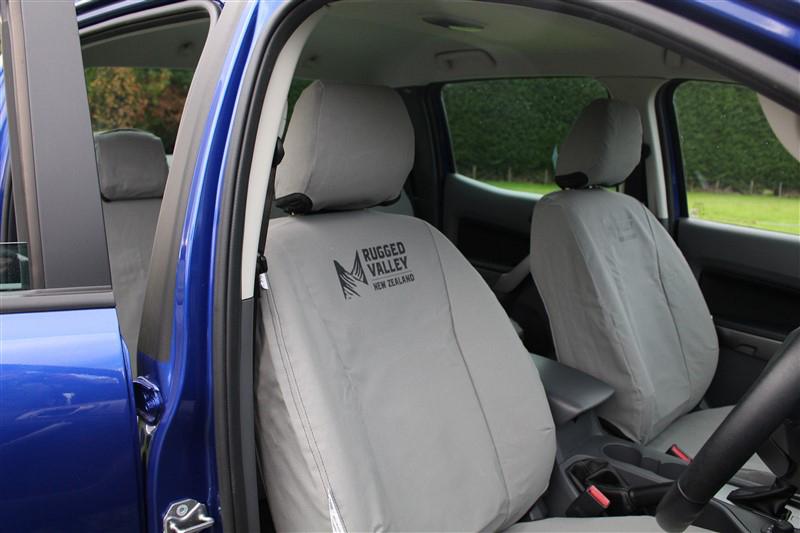
Kiwis need waterproof seat covers that work hard and take a thrashing. That’s why Rugged Valley has designed gear that is ready for work.
1. Reduce wear and tear and increase resale value
Rugged Valley seat covers reduce wear and tear from constant rubbing of work clothes on the seat as you slide in and out. This prevents the foam from breaking down and thus preserving your vehicle’s resale value.
2. Extreme protection for your fleet
Rugged Valley seat covers are manufactured from a heavy-duty 12oz canvas. This durable, waterproof fabric protects your seats from mud, water, dirt, and grease. So, you can throw your wet weather gear in the cab or drop mince pie all over the seats with no worries!
3. Tailormade to fit
Rugged Valley’s NZ-made, custom fitted design ensures your quality covers fit snugly to your seats. This stops the covers from irritating the driver by shuffling on the seats. As we all know, there’s nothing worse than having to adjust the seat cover every time you slide in and out of your vehicle.
With quality Rugged Valley seat covers, your fleet is ready to work, longer and harder.
Shop online at ruggedvalley.co.nz. Or request more information through your local dealer.
3 REASONS WHY YOU NEED PROTECTIVE SEAT COVERS FOR YOUR FLEET
Fleet Management
Sunday, 06 March 2022
File Download:
Related Articles

Wednesday, 19 August 2026
Fleet admin and procurement is all about speed, accuracy, and zero surprises. Built by RedBook New Zealand, the RegCheck.co.nz platform hits all three, giving fleet managers a sharp, operationally...
Tuesday, 21 July 2026
The New Zealand Choice of Repairer Industry Leaders Group have welcomed growing industry and public support for a Choice of Repairer law, saying the case for reform has never been stronger and...

Friday, 08 May 2026
New research from Teletrac Navman found that 74% of operators cite data accessibility as the largest barrier to improving equipment utilisation, resulting in assets frequently being unused 50% of the...