

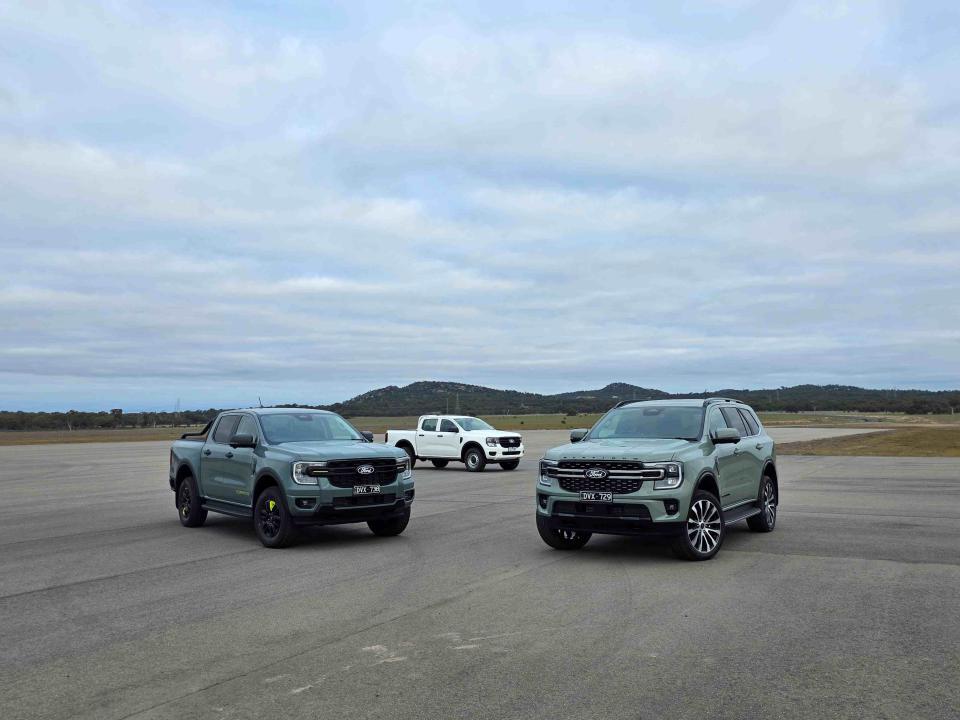
For some manufacturers, a mid-life update means a new grille, a fresh wheel design and a handful of extra features. For Ford, the MY26.5 Ranger and Everest represent something more strategic – a carefully considered evolution of two vehicles that continue to dominate their respective segments on both sides of the Tasman.
To understand just how seriously Ford takes the Ranger and Everest, you only need to visit the You Yangs Proving Ground (YYPG) in Victoria. Spread across 900 hectares just north of Geelong, the facility is Ford Australia's development playground, featuring everything from smooth highways and broken tarmac to deep mud, sand tracks and punishing off-road terrain.
It's here that Ford engineers spend countless hours ensuring Ranger and Everest continue to meet the expectations of fleet operators, tradies, adventurers and families alike. And it's where we were invited to sample the latest MY26.5 updates.
Evolution Rather Than Revolution
At first glance, spotting the changes requires a keen eye. The Ranger and Everest retain the familiar styling that has helped make them segment leaders. Underneath, however, Ford has focused on broadening choice and improving value.
The headline news is the expansion of the 3.0-litre V6 turbo-diesel engine across a much wider range of Ranger variants. Previously reserved for higher-specification models, the powerful six-cylinder is now available from the XL grade upwards, giving buyers greater access to the engine many regard as the sweet spot in the range.
Technology has also filtered down. The larger 12-inch SYNC4A infotainment screen now becomes standard across the Ranger lineup, including entry-level variants, while cab-chassis models receive a new Driver Assist Technology bar that maintains critical safety systems when aftermarket trays are installed.
For Everest buyers, Ford has introduced a new Active model that serves as a more accessible entry point while still offering premium features such as the 12-inch touchscreen, selectable drive modes and distinctive styling touches.
Meanwhile, the Wildtrak returns for those seeking a more adventurous SUV package, while Ranger buyers gain a striking new special edition in the form of the Wolftrak.
The Efficiency Challenge
Our introduction to the MY26.5 range began behind the wheel of an Everest Sport powered by Ford's 2.0-litre bi-turbo diesel and 10-speed automatic transmission.
Ford's challenge was simple: drive from Melbourne Airport to You Yangs using as little fuel as possible.
Naturally, the competitive instincts kicked in. Economy mode was selected immediately. Air conditioning was switched off despite the Australian conditions. Acceleration became a gentle suggestion rather than a command. Every downhill section was treated as an opportunity to coast.
The result? A remarkably impressive 6.2L/100km displayed on the trip computer by the time we reached the proving ground.
More importantly, it highlighted just how efficient the 2.0-litre powertrain remains. For fleet operators, businesses and budget-conscious buyers, the smaller engine delivers impressive economy without sacrificing the capability expected of a Ranger or Everest.
If running costs matter as much as towing figures, this powertrain deserves serious consideration.
Two Engines, Two Personalities
Throughout the day we rotated between 2.0-litre and 3.0-litre models across a variety of exercises designed to showcase their strengths.
The difference in character is immediately noticeable. The 2.0-litre bi-turbo feels lighter on its feet. With approximately 80kg less weight over the front axle, turn-in is sharper and the vehicle feels marginally more agile through directional changes. For everyday commuting and fleet duties, it provides more than enough performance while delivering excellent efficiency.
The 3.0-litre V6, however, remains the enthusiast's choice. It delivers effortless torque, stronger acceleration and a more muscular soundtrack that better suits the Ranger and Everest's rugged personalities. Whether towing, overtaking or tackling challenging terrain, the V6 simply feels more relaxed and capable.
The good news is there is no wrong choice. Ford has successfully created two distinct offerings that cater to different buyer priorities.
Putting Them to the Test
The proving ground environment allowed Ford to demonstrate just how extensively these vehicles are engineered.
Acceleration runs highlighted the performance gap between the two powertrains. Moose tests and emergency lane-change exercises showcased impressive stability and chassis control. High-speed dirt roads reinforced the composure that has become a hallmark of the T6 platform.
Then there was the muddy handling circuit. A slippery mix of clay, ruts and standing water provided the perfect opportunity to explore the capabilities of Ford's four-wheel-drive systems. Grip levels varied constantly, yet both Ranger and Everest displayed impressive balance and predictability.
The experience served as a reminder of why these vehicles continue to set benchmarks in their segments. Whether on-road or off-road, they consistently inspire confidence.
Enter the Wolftrak
Among the updated range, the new Ranger Wolftrak is perhaps the most visually distinctive.
Powered by the 3.0-litre V6 diesel and paired with Ford's 10-speed automatic and full-time four-wheel-drive system, the Wolftrak blends capability with a strong visual identity.
The standout Traction Green paintwork immediately grabs attention, while black exterior detailing, unique grille treatments, green accent highlights and 17-inch alloy wheels wrapped in all-terrain tyres create a tougher, more adventurous appearance.
Inside, the theme continues with green-trimmed vinyl seats, durable all-weather floor mats and a comprehensive technology package that includes the 12-inch SYNC4A touchscreen, 360-degree camera system and Pro Trailer Backup Assist.
For buyers wanting something that stands out from the sea of white work utes, the Wolftrak offers plenty of showroom appeal while retaining all the practicality expected from a Ranger.
Built in Australia, Designed for the World
Perhaps the most impressive aspect of the MY26.5 update isn't the new equipment or expanded powertrain choices.
It's the depth of Australian engineering behind the product. Ford Australia remains the global centre of excellence for the T6 platform, with local engineers responsible for developing and refining vehicles sold across multiple international markets. The company's investment in local research and development continues to pay dividends, allowing Ranger and Everest to evolve in direct response to customer feedback.
That philosophy is evident throughout the MY26.5 range. Every update feels purposeful rather than cosmetic.
Summing things up
The MY26.5 Ranger and Everest don't attempt to reinvent the wheel. Instead, Ford has focused on strengthening an already successful formula.
The broader availability of the V6, the introduction of a highly efficient 2.0-litre option, upgraded technology across the range and the addition of new variants such as the Wolftrak and Everest Active all contribute to a more complete lineup.
For fleet buyers, the improved accessibility of key features and powertrains makes a compelling business case. For private owners, there are now more choices than ever before.
Most importantly, the driving experience remains as polished and capable as ever.
In a market increasingly crowded with new challengers, Ford's response is clear: keep refining, keep listening and keep building vehicles that work as hard as their owners do. On the evidence of the MY26.5 Ranger and Everest, that strategy continues to look like a winning one.