

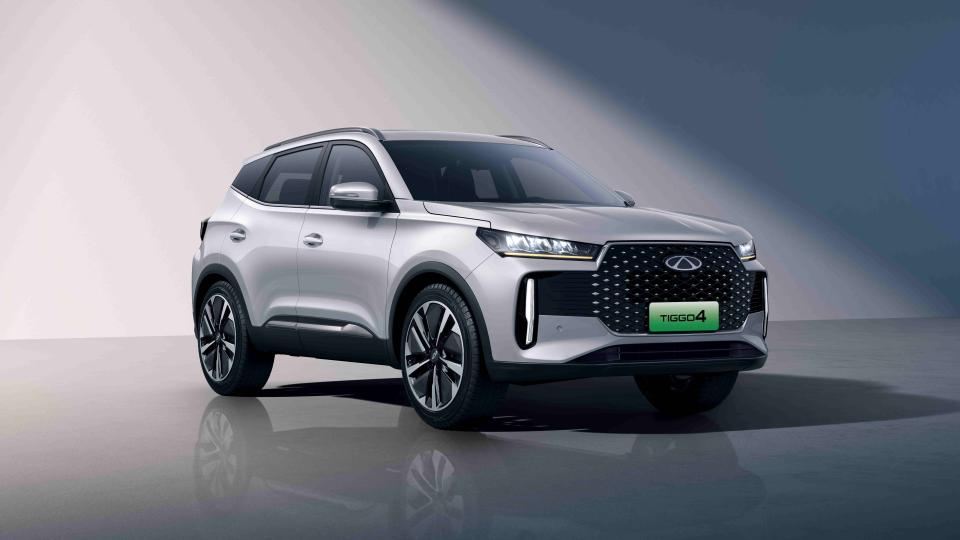
The arrival of the Chery TIGGO 4 Hybrid in New Zealand presents a significant opportunity for fleet managers seeking to optimise budgets and advance corporate sustainability objectives. As a compact SUV with a highly competitive acquisition cost and an advanced hybrid powertrain, the TIGGO 4 fills a critical gap in the market for affordable, fuel-efficient fleet vehicles. This analysis assesses the model's key attributes from a corporate fleet perspective, focusing on total cost of ownership, operational suitability, and strategic value.
Financial Viability and Total Cost of Ownership (TCO)
The primary value proposition of the TIGGO 4 Hybrid for any corporate fleet is its exceptional financial accessibility. With the Urban model priced from just $32,990 and the higher-spec Ultimate from $37,990 (plus on-road costs), the vehicle significantly lowers the barrier to entry for fleet hybridization.
This attractive initial outlay is complemented by compelling long-term operational savings. The vehicle's series-parallel hybrid system, which pairs a 1.5-litre petrol engine with an electric motor, achieves a combined fuel economy of 5.4L/100km. For a fleet, this translates directly into reduced monthly fuel expenditure, a critical component of lowering the vehicle's total cost of ownership (TCO). Furthermore, the reduced reliance on the internal combustion engine, particularly in urban environments, can lead to lower maintenance costs and extended service intervals over the life of the asset. Depending on local regulations, the vehicle's lower emissions may also result in Fringe Benefit Tax (FBT) advantages, further improving its financial case.
Operational Efficiency and Driver Suitability
The TIGGO 4 Hybrid's powertrain is engineered for the typical demands of a corporate vehicle. The system intelligently prioritizes the electric motor for low-speed, stop-start city driving, enabling silent, zero-emission operation that is ideal for sales representatives and service personnel operating in urban centers. The petrol engine seamlessly engages for highway speeds or when additional power is required, ensuring no compromise on performance or range for longer journeys.
While full specifications are pending ahead of its August 2025 showroom debut, the two-tier model structure allows for tailored fleet allocation. The Urban model provides a cost-effective workhorse, while the Ultimate variant is expected to include a more comprehensive suite of driver-assistance technologies. These advanced safety features are crucial for mitigating risk and fulfilling duty-of-care obligations to employees. The compact SUV format offers a practical balance of a manageable footprint for city parking and sufficient interior space for personnel and equipment.
Corporate Image and Sustainability
Adopting the TIGGO 4 Hybrid into a corporate fleet sends a powerful external message. In an era where Environmental, Social, and Governance (ESG) criteria are increasingly important, transitioning to lower-emission vehicles demonstrates a tangible commitment to sustainability. As Chery's Chief Commercial Officer, Lucas Harris, noted, the vehicle makes "advanced technology available to more Kiwis," allowing companies to align their brand with modern, efficient technology without incurring prohibitive costs. The vehicle's smart design serves as a mobile advertisement for a forward-thinking and fiscally responsible organisation.
The Chery TIGGO 4 Hybrid emerges as a highly compelling option for corporate fleet managers in New Zealand. It directly addresses the core fleet imperatives of cost control through a low acquisition price and excellent fuel economy. Its operational profile is well-suited to a variety of business roles, and its adoption supports key corporate responsibility goals. For organizations looking to modernize their fleet and reduce operating expenses, the TIGGO 4 Hybrid warrants serious consideration as a value-packed, efficient, and strategically sound asset.